
From corporation to crowd: How organizations evolved through time and technology
For centuries, the central challenge of commerce has been the same: How do you get people with different roles, different information, and different incentives to work together toward a common purpose? The answer has almost always involved some form of organizational innovation: new structures that allocate risk, reward, and responsibility in ways the previous generation couldn’t. The history of commerce is also a history of coordination.
The corporation was the last great organizational leap, built for the industrial age and the coordination problems (and opportunities) it created. But software and internet-native protocols can now reduce the need for much of the previously unavoidable overhead — the many layers of centralized management, bureaucratic bloat, and intermediation — of the traditional firm.
Existing legal structures were not designed for this new world. Only one relatively new entrant is emerging as a serious contender for the next organizational leap: The DUNA, the sole legal entity explicitly recognized by once-in-a-generation market structure legislation now advancing through Congress. It’s arguably the only structure credibly built for internet-native organizations.
To understand why new organizational forms are emerging today, it helps to remember what problem the corporation solved in the first place — and where we’re going.
How merchants managed risk
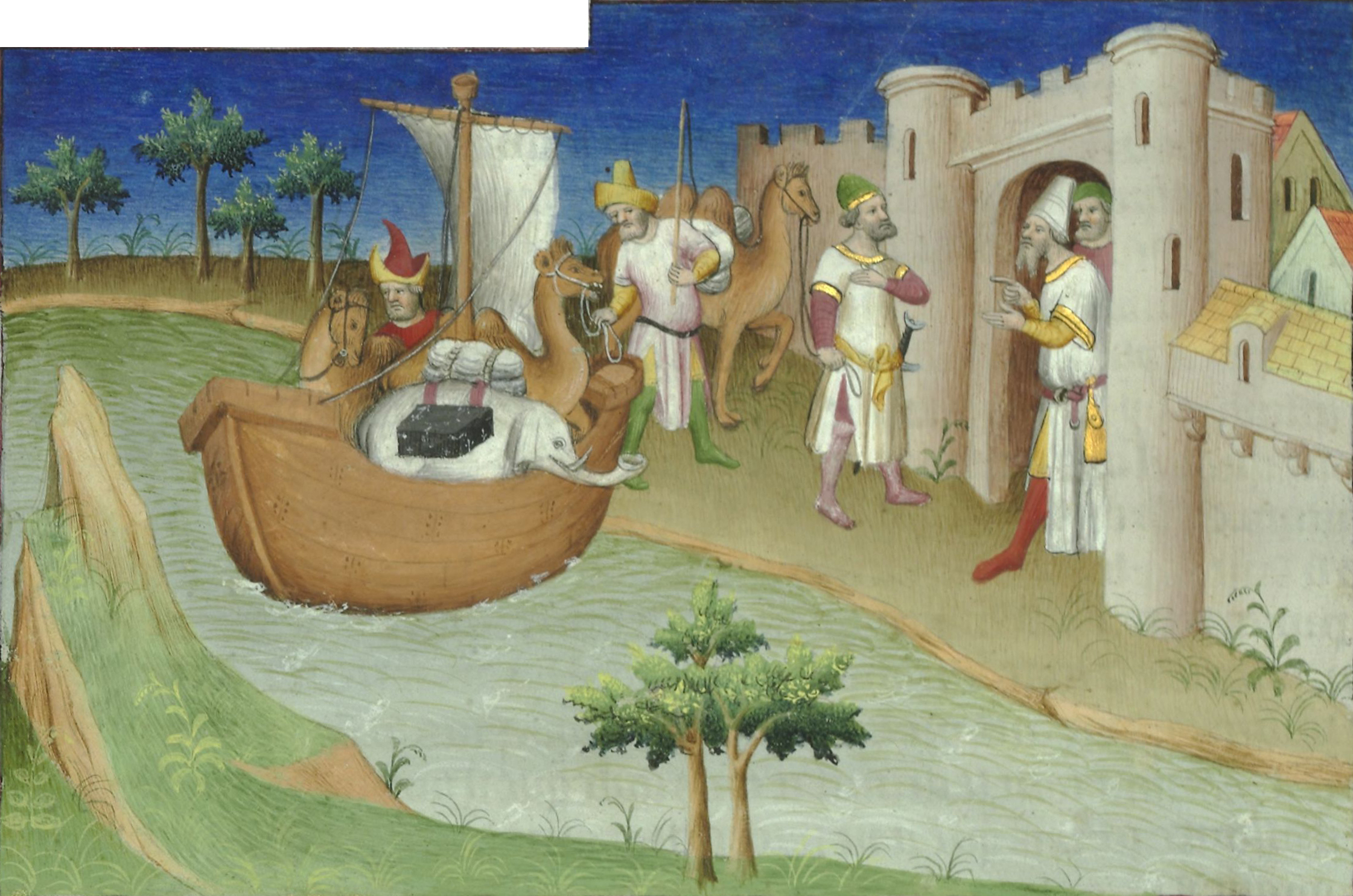
Before corporations, business was personal: Imagine Marco Polo undertaking long-distance sales calls with his father and uncle. Family businesses like these quite literally took their lives in their hands. If a contract went south, their personal fortunes could be wiped out — or worse. Their very lives could be at stake.
Merchant ventures largely relied on two kinds of protection, but neither was guaranteed. The first was geopolitical: the relative peace of the Mongol Empire’s Pax Mongolica. If you attacked someone the Mongols liked, then you would be in trouble with the notoriously brutal Mongols. The second was social: If you cheated someone or defaulted on a contract and so violated the Lex Mercatoria — a self-enforced merchant honor code (ca. 1100–1600) — your reputation would be sullied, and you could be blackballed from the trade from Quanzhou to Timbuktu.
A merchant’s word really was, in the absence of strong institutions, worth more than gold. The Polo family had it somewhat easy, too, since they were bound by blood. Many other business partnerships have been less sanguine.
One of the most persistent issues businesses face is tensions between principals and agents; or, in this case, investors and merchants. One innovation was the medieval commenda, which provided some limited liability: Investors could only lose what they put in, and the same (theoretically) went for the merchants. The partners split the profits according to their original contributions. Commendas arose organically, long before there were any formal statutes. Yet every concern was still one small shock away from going under. And the model didn’t scale: Commendas dissolved at the end of a voyage, or in the event of bankruptcy. Or death.

A further innovation was the Florentine compagnia. Think: Medici bank. This form was a more durable and operationally sophisticated legal entity than the commenda. A compagnia could sustain ongoing multi-partner commercial relationships, but it continued to rest on the personal liability of all partners. This was the most advanced pre-corporate instrument yet devised — the high-water mark of medieval partnership — yet it still left its partners exposed. Unlike the Church and universities, which had long enjoyed legal personhood derived from Roman concepts of the universitas (a collective entity treated as a single legal person), commercial enterprises still lacked a fully separate legal identity.

These shortcomings wouldn’t be remedied until the 17th century, when early modern Europe came up with something new. This innovation, and its legal protections, allowed ventures to more easily raise capital, distribute ownership through stock offerings, and shield owners from liability; it was the corporation. Corporate powers, famously granted to the Dutch East India Company (or VOC: Vereenigde Oostindische Compagnie), arrived as a revelation and spread to the rest of Europe once it became clear what a good idea corporations were. (While the English East India Company preceded the VOC by a couple of years, it was far less sophisticated, raising capital only for specific voyages, and lacking a mechanism to raise public equity.)
By lowering the risk of doing business, and reducing coordination costs, corporations made large-scale, capital-intensive ventures — and much of the modern world — possible.
The price of scale
While solving a host of real problems, the corporation introduced new ones. Its first achievement was making participants care about one another’s outcomes: By tying shareholders, directors, and captains to the same legal entity and the same bottom line, the corporation forced each party to internalize costs it would otherwise impose on the others with impunity. But shared stakes are not the same as perfectly aligned incentives.
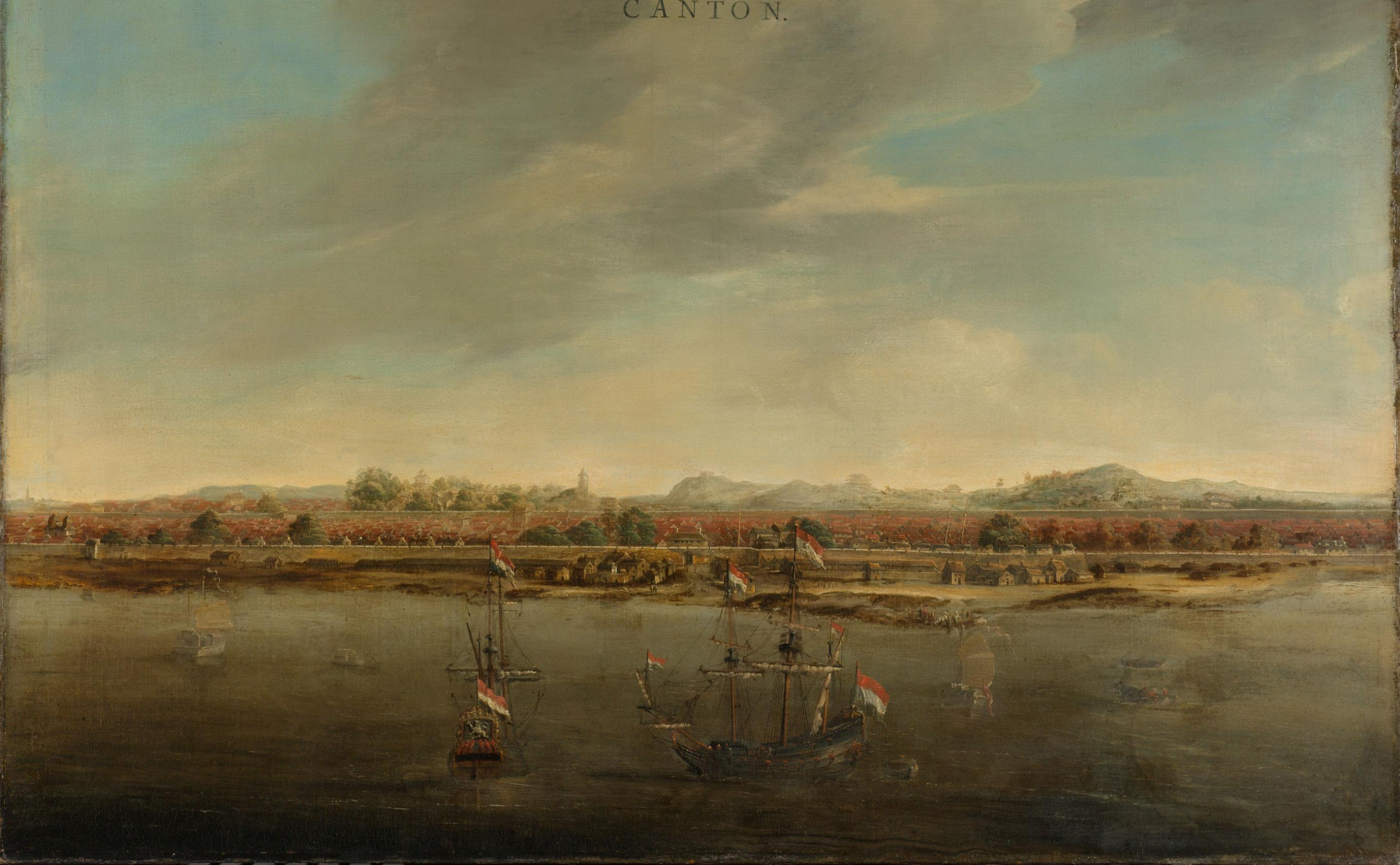
Let’s consider the VOC as an example. Its legal form is familiar but complicated: Shareholders included many Dutch citizens eager for a return on their investments, but who were too busy with their lives to be concerned with the VOC’s day-to-day operations or its grand strategy. The board of directors, the “Heeren XVII,” made plans for how everyone was going to make money. Ship captains and traders on the ground in Southeast Asia had to make the best choices for the company in the moment with limited information and resources.
In theory. In reality, these three parties’ interests were not perfectly aligned; they diverged slightly insofar as one party could make more money for themselves at the expense of others.
How do you make sure the captains, far removed from the oversight and control of the Heeren XVII, don’t ransack another ship and abscond with the loot? Prevent the traders from taking bribes, or cutting larger deals for themselves? Ensure the board is making the right calls? What if you’re a group of shareholders who also cleave to Protestant values and have concerns about the VOC’s sometimes rapacious practices? Questions like these led to all sorts of innovation in incentive design — options like bonuses, profit-sharing, audits, surveillance, and some might even say efficiency wages — and to new legal protections where the state would ensure fair play. It also led to untold abuses.
And yet! The corporation as it evolved over time remains the best thing we’ve got for aligning incentives, reducing coordination costs, generating profits, and protecting everyone involved in a venture.
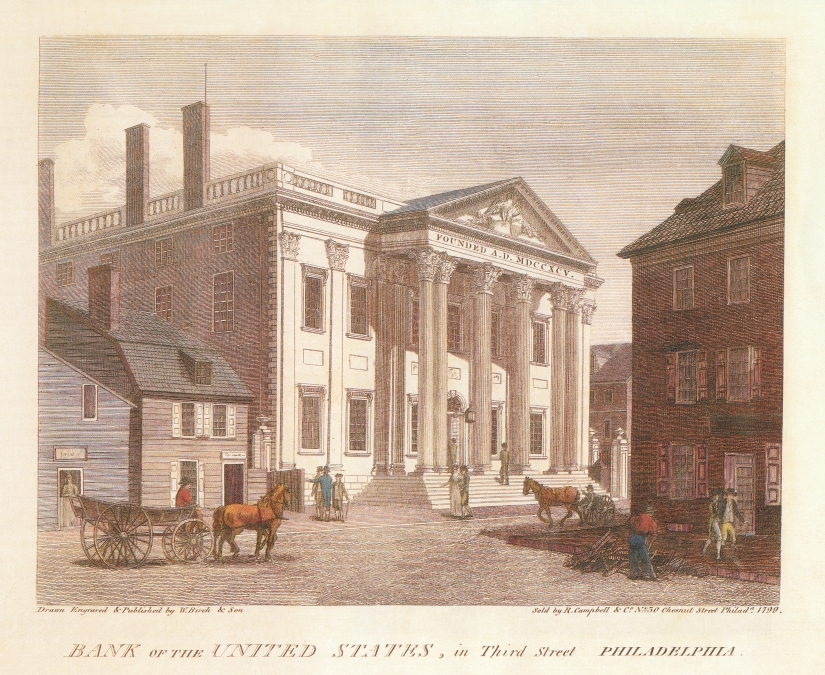
Shortly after the United States was formed, it recognized corporations through special legislative charter, but these were rare. The First Bank of the United States, chartered by Congress in 1791, was both the first and most famous example. New York introduced the first general incorporation statutes in 1811. By the mid-19th century, more states allowed incorporation without special acts and the idea of “limited liability” became more standardized across states. An explosion of corporations followed during the phase of late 19th century industrialization, culminating in the Delaware General Corporation Law of 1899.
Cooperatives were another option that gained momentum in the 19th century. They experimented with a different solution to the problem of coordination: member ownership and democratic governance. Farmers, consumers, workers, and credit unions used cooperatives to align the interests of participants more directly with the organization itself. While cooperatives succeeded in some settings, like agriculture (see for example Land O’Lakes), they generally remained more specialized. The corporation, meanwhile, grew more and more popular.1
Another solution was the limited liability company, or LLC. While the LLC had its precursors in older forms like the German GmbH or the United Kingdom’s limited company (Ltd.), the LLC itself is surprisingly modern: Wyoming introduced it into law only in 1977. Prior to this, corporations did offer limited liability but were rigid and subject to double taxation, while partnerships were flexible but exposed participants to personal risk. The LLC combined elements of each — limited liability with pass-through taxation — making it a better fit for a wide range of smaller ventures. Today, they’ve become a default form for many startups, small businesses, and investment vehicles.2
A succession of minor variations have followed: the LLP, or limited liability partnership (1991); the L3C, or low-profit limited liability company (2008); the benefit corporation (2010); and so on. These are certainly useful, refining the corporation for particular uses. But every now and then, technology changes what’s possible and you get a form that is, in comparison, revolutionary.
DAOs and their discontents
Decentralization is one such revolutionary idea: the ability for large groups of people to coordinate without centralized management or trusted intermediaries.
Before crypto — and especially before Satoshi Nakamoto’s invention of the blockchain — that possibility was more philosophical than practical. One of crypto’s first great innovations was the DAO, the decentralized autonomous organization. A DAO is an organization governed by rules encoded in software and collectively managed by its participants rather than a central authority. There is no centralized management team or board of directors, no Heeren XVII.
But decentralized governance is hard. Getting token-holders to vote on important issues has proven even harder than getting individual shareholders to vote on board members, a process that already has abysmally low voting rates, on par with U.S. municipal elections. Ensuring that power isn’t concentrated in the hands of only a few token holders can also be challenging.
The recent legal environment only exacerbated these challenges. Regrettably, the previous administration’s Securities and Exchange Commission declined to provide clear rules for crypto projects and also weaponized that ambiguity through aggressive enforcement actions against the industry. Entrepreneurship doesn’t thrive under uncertainty; it’s hard enough even when you do know the rules.
At the heart of this question of legality is one of the three prongs of the so-called Howey test, which the SEC uses to evaluate whether an instrument is a security: (1) An investment of money; (2) in a common enterprise; (3) with profits to come solely from the efforts of others. Asking whether the value of the asset depends on the “efforts of others” in the case of a public company would include, for example, the managers who run the firm. In the case of crypto projects and their DAOs, the SEC noted that the ongoing development of the protocol, even if it were done by a bunch of unaffiliated people who may or may not hold the token, subjected a related token to securities laws — making widespread participation and onchain transactions impossible.
Equally importantly, since DAOs weren’t officially recognized by the state, the owners of a project wouldn’t have any of the protections mentioned earlier, like limited liability. In other words, members of a DAO could face unlimited personal liability, putting crypto governance on a footing that is, legally speaking, almost medieval.
So crypto projects did what their lawyers told them. They set up offshore foundations as separate entities that oversaw the ongoing development of protocols, severing the connection between those efforts and the U.S. businesses. Or they established themselves outside the United States. Either “solution” was to the detriment of innovation in the U.S., and to U.S. jobs and tax revenues.
Offshore crypto foundations were, to put it kindly, convoluted. These lawyer-concocted workarounds shifted authority and ongoing development efforts to an “independent” entity in hopes of avoiding securities regulation. The strategy was understandable at a time of regulatory hostility, but it also exposed deep flaws: Foundations have weak incentive alignment, limited ability to drive growth, and an inevitable tendency to entrench centralized control.
But what choice did projects have when stuck between the rock of “get sued by the SEC” and the hard place of “set up a weird organizational structure that’s going to create incentive alignment issues”?
This is why the DUNA — the decentralized unincorporated nonprofit association — is so significant. It draws on the long history of structuring ventures and governance to achieve the goals of every business ever: coordinating people efficiently around a common purpose. But it does so without centralized managerial control, reducing the principal-agent problems and information asymmetries that arise in traditional firms. In doing so, the DUNA departs from one of the core assumptions underlying the Howey test: that participants are relying on the managerial efforts of others to generate value.3
The crowd gets its own legal form
Before the DUNA, there were three options for organizing around and governing a crypto project: a DAO, which lacked legal recognition and exposed members to potentially ruinous liability; a traditional corporate entity, which forced projects into ill-fitting hierarchical structures and exposed them to action from the SEC; or an offshore foundation, which was legally and practically convoluted and pushed much of the industry abroad.
Until recently, there was no clean way for a group of users to govern a decentralized network — a form of organization that blockchain technologies have only recently made possible — while maintaining some of the protections enjoyed by companies. Now there is.
Put simply, the DUNA turns a crowd into a legal entity. Three states so far — Alabama, West Virginia, and Wyoming — have passed laws authorizing this new business structure, which combines the legal superpowers of existing forms with the ability to decentralize control, something very different from the traditional corporation and which no previous entities have ever fully achieved.
What protections does the DUNA provide more specifically? Its powers include legal personhood, limited liability, persistence over time, and state recognition — many of the same elements that make modern corporations possible. Recognition of the group’s “personhood” allows the entity to enter into contracts on behalf of its participants, while limited liability ensures that members aren’t held personally liable for organizational obligations. Together, these features make it possible for large, loosely knit groups of people to coordinate — raise capital, hold assets, hire administrators, pay taxes, make deals — without putting members at undue risk and exposing them to potentially ruinous liability.

Organizational forms don’t take hold all at once; they spread as jurisdictions compete, as lawyers grow comfortable with them, and as entrepreneurs begin to trust them. Before Delaware became the venue of choice for incorporation, New Jersey held sway4; now, Texas and Nevada are gaining ground. The LLC first received approval in Wyoming and then migrated, once its tax treatment was clarified, to all fifty states by 1997. As for the DUNA, Wyoming was once again the pioneer, enacting it as law in March 2024. Already, crypto protocols and communities including Uniswap Governance and Nouns DAO have implemented it.
Much as the corporation gave large-scale enterprise its first native form, the DUNA is giving open, internet-scale, decentralized networks a legal form of their own.
A new era of organizational design
Think of the DUNA as a legal wrapper that allows the governance mechanism of a decentralized network to do business, but without introducing traditional centralized management. It’s built on the unincorporated nonprofit association (or UNA), a body of law adopted by 17 states and Washington, D.C., that helps groups like homeowners and civic associations, recreational sports leagues, religious congregations, and hobby clubs to organize under the law. UNAs provide lightweight governance without the overhead of a corporation or LLC, allowing these groups to own property, enter contracts, and sue (or be sued) as an entity.5
The DUNA is similar: It allows a group of tokenholders or contributors to govern through onchain rules or token-based voting rather than a board or management team. Members get the protections of limited liability, separating the entity’s obligations from their personal assets; and the organization can be understood by and interact with courts, regulators, and counterparties.
But the DUNA doesn’t solve every problem. It doesn’t eliminate governance challenges. It doesn’t guarantee decentralization (although to qualify as a DUNA, a DAO must have at least 100 active members). And it doesn’t magically bypass securities law. What it does do is close a specific gap, making it possible for a decentralized organization to be a legally recognized one.
• • •
From informal merchant networks, to partnerships, to corporations, to LLCs, to now, DAOs, each new organizational technology emerges when people need new modes of coordination. The DUNA may mark the beginning of a new era in this evolution of organizational design. But just as the corporation didn’t replace all partnerships, the DUNA doesn’t supplant everything that came before. It merely expands the menu. And for the first time, it makes possible decentralized networks that are represented by fully legible legal entities.
For most of human history, organizing at scale — even small scale — meant taking on enormous personal risk. Daring entrepreneurs, like the Polos, relied on family, reputation, and fragile norms to hold things together, always one shipwreck away from ruin.6 The corporation changed the calculus by separating the fortunes of a venture from the fortunes of the people behind it. The DUNA extends that separation into a new domain: communities governing decentralized networks based on blockchains.
Now, even a loosely organized network of strangers on the internet can act as a single entity — make deals, hold assets, take risks — without any one participant having to bet their livelihood on the outcome. In this way, it’s a new answer to one of commerce’s oldest problems.
• • •
Acknowledgments: We’d like to thank Aiden Slavin, Alejandro Flores, Miles Jennings, Scott Kominers, Sonal Chokshi, and Steph Zinn for their helpful comments and emendations. Any errors remain our own.
Notes
- While cooperatives may seem spiritually aligned with internet-native organizations like DAOs, co-ops presuppose a relatively stable set of identifiable members and hierarchical leadership structures that many decentralized networks lack. ↩
- Curiously, one of the United States’ other big contributions — corporate bankruptcy law — was for a long period not widely copied around the globe. This codifies the idea that someone can take a risk, fail, reorganize, and try again, and it is an engine of American dynamism. ↩
- Wyoming had attempted to solve the problem in 2021, letting DAOs organize as LLCs. But an LLC still assumes a defined membership list, K-1 tax filings, and a profit-making purpose. While it was a good fit for some small investment clubs, it was an awkward fit for a permissionless, pseudonymous network governed by a nonprofit mission, and did little to resolve the Howey question of whether membership interests themselves counted as securities. ↩
- That is, until Woodrow Wilson, then governor of New Jersey, did Delaware a massive favor by cracking down on corporate-friendly incorporation laws in his home state. ↩
- While trusts might seem like a natural vehicle for decentralized groups, they are a poor fit. Trusts are designed around the relationships between identifiable fiduciaries and beneficiaries, which makes them an awkward choice for organizations whose governance is designed to be intentionally diffuse. ↩
- Incidentally, after commanding a Venetian galley in a war between rival trading powers, Marco Polo was captured and thrown into a Genoese prison, where he would dictate his famous travelogue. ↩
The views expressed here are those of the individual AH Capital Management, L.L.C. (“a16z”) personnel quoted and are not the views of a16z or its affiliates. Certain information contained in here has been obtained from third-party sources, including from portfolio companies of funds managed by a16z. While taken from sources believed to be reliable, a16z has not independently verified such information and makes no representations about the current or enduring accuracy of the information or its appropriateness for a given situation. In addition, this content may include third-party advertisements; a16z has not reviewed such advertisements and does not endorse any advertising content contained therein.
This content is provided for informational purposes only, and should not be relied upon as legal, business, investment, or tax advice. You should consult your own advisers as to those matters. References to any securities or digital assets are for illustrative purposes only, and do not constitute an investment recommendation or offer to provide investment advisory services. Furthermore, this content is not directed at nor intended for use by any investors or prospective investors, and may not under any circumstances be relied upon when making a decision to invest in any fund managed by a16z. (An offering to invest in an a16z fund will be made only by the private placement memorandum, subscription agreement, and other relevant documentation of any such fund and should be read in their entirety.) Any investments or portfolio companies mentioned, referred to, or described are not representative of all investments in vehicles managed by a16z, and there can be no assurance that the investments will be profitable or that other investments made in the future will have similar characteristics or results. A list of investments made by funds managed by Andreessen Horowitz (excluding investments for which the issuer has not provided permission for a16z to disclose publicly as well as unannounced investments in publicly traded digital assets) is available at https://a16z.com/investments/.
Charts and graphs provided within are for informational purposes solely and should not be relied upon when making any investment decision. Past performance is not indicative of future results. The content speaks only as of the date indicated. Any projections, estimates, forecasts, targets, prospects, and/or opinions expressed in these materials are subject to change without notice and may differ or be contrary to opinions expressed by others. Please see https://a16z.com/disclosures for additional important information.